
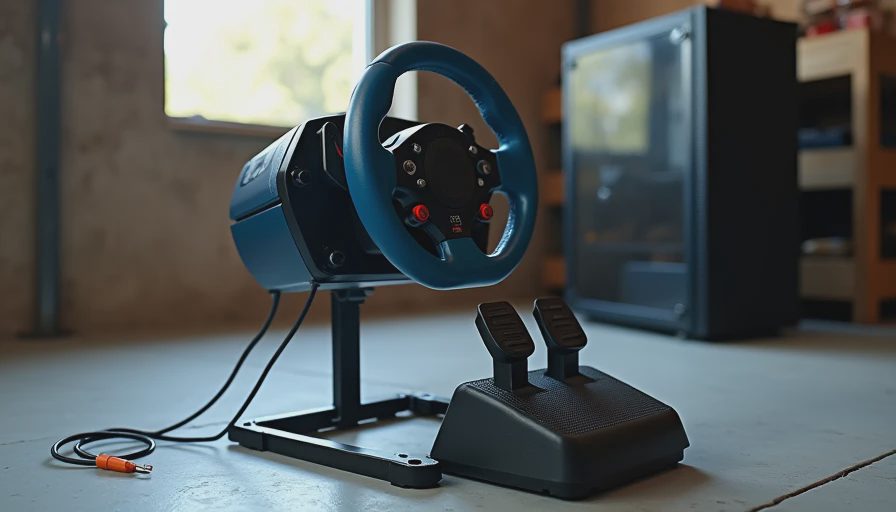
The Garage Hobby That Got Out of Hand
I never planned to become a sim racer. I just wanted a better way to play racing games without balancing a controller on the couch while the kids asked why the car kept hitting the wall. One evening I looked up entry-level wheels, then pedal sets, then stands. Suddenly I was deep in a hobby that can easily cost as much as a used car.
Instead of following the usual “buy once, cry once” advice that leads to four-figure cockpits, I set a hard rule: the entire rig—wheel, pedals, stand, and the PC upgrades needed to run it smoothly—had to cost less than a good set of performance tires for the street car. That number became the budget ceiling. Everything else had to fit underneath it.
The result still sits in the garage today. It is not pretty. It is not the lowest-latency, highest-fidelity setup on the forums. It is, however, good enough that I actually use it, and that was the whole point.
What the Budget Forced Me to Prioritize
With a tight ceiling you stop chasing the perfect direct-drive wheel and start asking what actually improves the experience the most for the money.
A solid wheel and pedal foundation
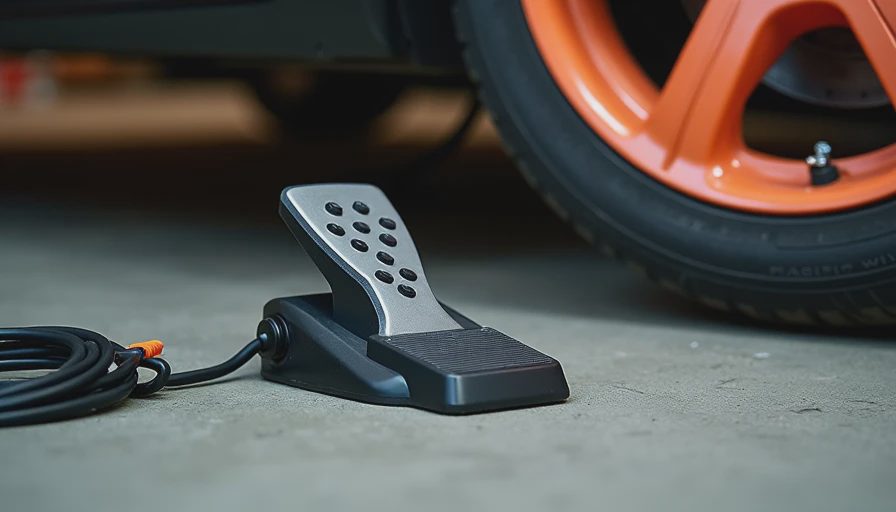
I went with a well-reviewed mid-tier wheel base and a set of pedals that included a proper load-cell brake. The difference between a potentiometer brake and a load-cell brake is one of the largest feel upgrades available at this price level. Force feedback strength and pedal consistency matter more day-to-day than the absolute highest torque number.
A stable stand or cockpit
A wheel that moves when you turn defeats the purpose. I used a sturdy, adjustable stand that bolts down and keeps the wheel and pedals planted. It is not a full aluminum profile cockpit, but it does not flex under hard inputs and folds out of the way when the garage needs to return to normal duty.
PC performance that stays smooth
Sim racing punishes low frame rates and stuttering more than many other genres. I made sure the existing garage PC had enough CPU and GPU headroom for stable frame times at the resolution I actually use. A modest GPU upgrade and attention to cooling were enough; a brand-new flagship card was not required.
Comfort that lasts more than twenty minutes
A cheap seat that hurts after half an hour means the rig collects dust. I used a simple but supportive bucket-style seat mounted at a realistic driving position. Nothing exotic, just something I could sit in for a proper session without fidgeting.
Everything else—fancy button boxes, sequential shifters, triple screens, motion platforms—was deferred. Those are fun upgrades later if the hobby sticks. They are not required to start enjoying the cars.
The Compromises That Worked
I accepted a belt-driven wheel instead of direct drive. The feedback is strong and detailed enough for learning tracks and improving consistency. The gap to higher-end bases is real, but it is not the difference between “usable” and “unusable.”
I ran a single ultrawide monitor instead of triples. Field of view is narrower, yet the simplicity and desk space saved were worth it for a garage that still needs to function as a workshop.
I skipped the expensive load-cell upgrade path on the pedals beyond the solid entry set I chose. The brake feel is consistent and teachable. That is enough to build good habits.
These choices kept the total under the tire-budget ceiling while still delivering a rig that feels like driving rather than like playing a video game with a fancy controller.
What Surprised Me After Months of Use
The biggest improvement was not the wheel torque or the pedal precision. It was simply having a dedicated, stable position that I could jump into without rearranging the living room. Because the stand folds and the seat is not permanent furniture, the garage can still host real car work and the occasional family project. That flexibility kept the hobby from becoming a source of household tension.
I also learned that software and practice matter more than the last 10 % of hardware fidelity. Learning one or two cars well, understanding tire behavior, and developing consistent braking points produced larger lap-time gains than any of the upgrades I deferred.
Dust and garage temperature are real factors. I keep a cover over the wheel and seat when not in use and make sure the PC has clean filters. Sim racing hardware does not love the same environment that a workbench does.
What I Would Change Next Time
If I were starting again with the same budget I would still prioritize the load-cell brake and a rigid stand. I might allocate a little more toward a stronger wheel base and accept a simpler monitor setup. I would also plan cable management and power strips from day one—garage floors and loose cables are a bad combination.
The one thing I would not change is the budget discipline. It forced clear priorities and left room for the hobby to grow only if it continued to be fun. That is a healthier approach than buying the dream rig first and then discovering you only use it twice a month.
Final Notes from the Garage
A sim-racing setup does not need to impress the internet. It needs to be stable, comfortable enough for real sessions, and affordable enough that you do not resent it when life gets busy. By treating the cost of a set of tires as the hard limit, I ended up with a rig that actually gets used instead of one that looks impressive in photos and then collects dust.
The cars on screen still go faster than anything I will ever drive on the street. The satisfaction of improving a lap time on a proper wheel and pedals is the same whether the hardware cost four figures or stayed under the tire budget.
Build it once. Build it right. And keep the rest of the garage usable for the cars that run on actual pavement.